Ocean Worlds: The Hidden Seas of the Outer Solar System
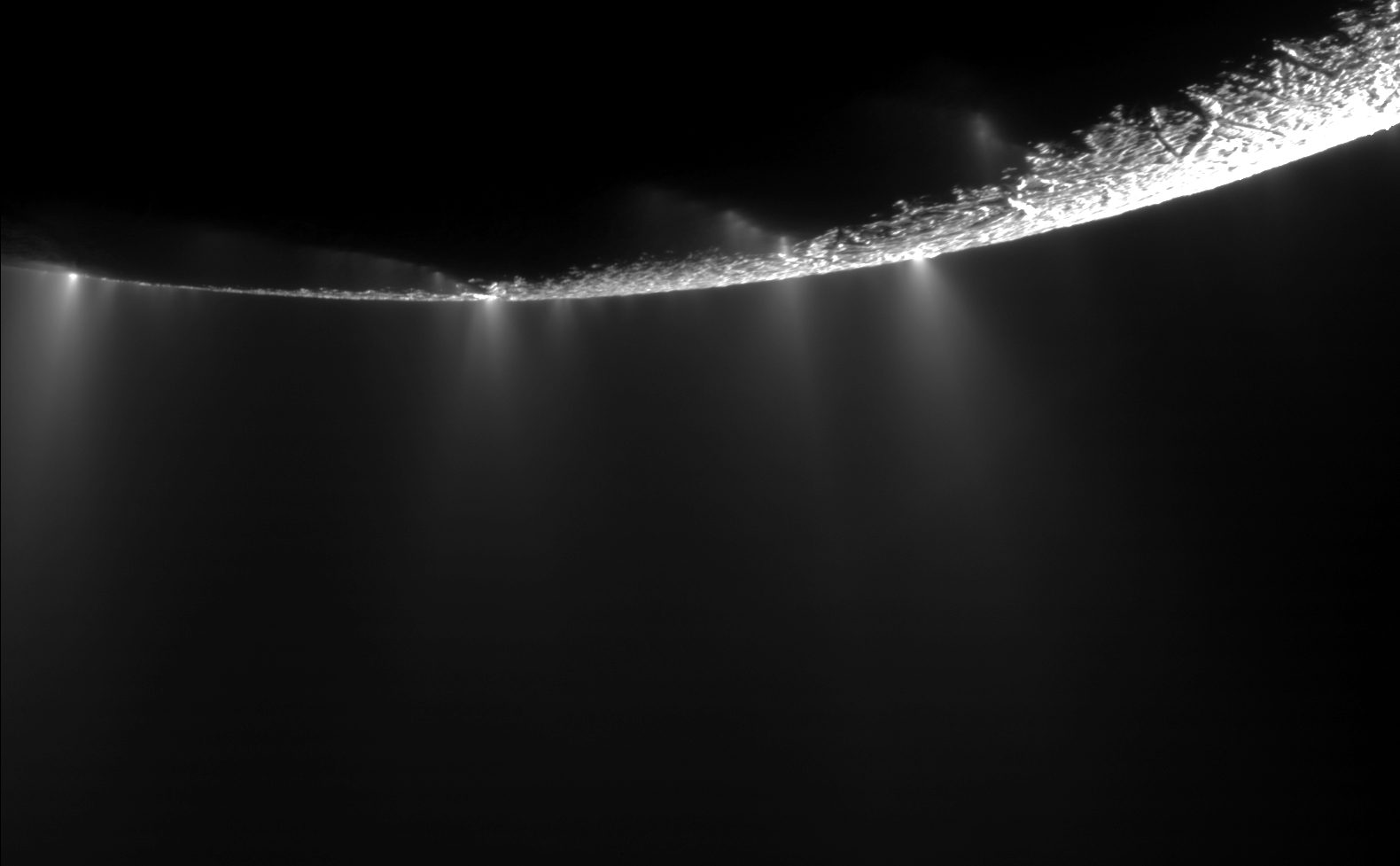
The most interesting seas in the solar system are not on Earth. Under kilometres of ice on moons orbiting Jupiter and Saturn, scientists have found global oceans — dark, deep and warmed from within. Some of them spray samples of their water into space, as if offering it up for inspection.
Europa, a moon of Jupiter slightly smaller than our own Moon, hides an ocean beneath its cracked ice shell that may contain twice the water of all Earth's oceans. Saturn's small moon Enceladus goes further: geysers at its south pole blast ocean water into space, feeding one of Saturn's rings. Titan, Saturn's giant moon, has lakes of liquid methane on its surface and likely a water ocean below. Even distant Pluto shows hints of a buried sea. The outer solar system, once assumed frozen and dead, turns out to be full of water.
Life as we know it needs three things: liquid water, chemistry, and energy. The ocean moons appear to have all three. Their oceans sit on rocky floors, so water and minerals mix the way they do in Earth's deep-sea vents — places where life thrives without sunlight. The moons' oceans are kept liquid by tidal flexing: the gravity of their giant planets kneads them like dough, generating heat. Where there is water, rock and warmth together for billions of years, biologists pay attention.
The remarkable part is how testable this has become. Spacecraft flying through Enceladus' plumes have already sampled its spray and found salts, organic molecules and hydrogen — the chemical signature of hydrothermal activity, and a food source for microbes on Earth. Europa's plumes are harder to catch, but dedicated missions are on their way: NASA's Europa Clipper is travelling to Jupiter now, and Europe's JUICE mission will study its sister moons. Neither will land; both will taste, photograph and probe oceans they cannot see.
If life is found in even one of these oceans, the implication is enormous: life would have started independently at least twice in one solar system, which would suggest the universe is full of it. If the oceans are sterile, that is profound too — it would mean water and warmth are not enough. Either way, the answer is waiting under the ice, in the dark seas of moons most people have never heard of.
Enjoying the Magazine? Follow the live headlines in Science, or write for us — we publish guest contributors.